
Article 3: Millet Milk vs Dairy Milk: What's the Difference?
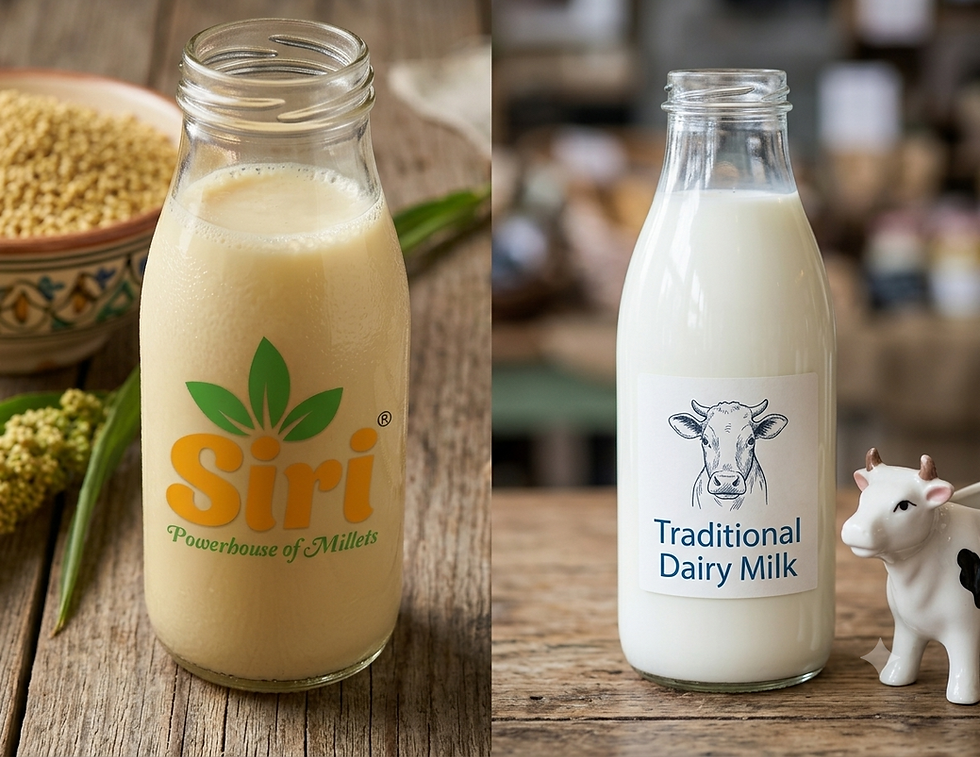
Dairy milk has been a staple for centuries, but plant-based alternatives are growing quickly. Millet milk, made from an ancient grain, is one of the newest. Here is how the two compare.
Source and Production
Dairy milk comes from cows, buffaloes or goats. It requires animal husbandry, feed, water and land.
Millet milk comes from grains. Millets are hardy crops that grow well in dry conditions with relatively little water and few inputs, which gives them a lighter environmental footprint.
Taste and Texture
Dairy milk is rich and creamy, with a familiar flavour. Millet milk is lighter, mildly sweet and slightly nutty. In desserts, a well-formulated millet base can deliver a smooth, creamy result that surprises people who expect plant milks to taste thin.
Nutrition
The two differ meaningfully:
· Protein: Dairy milk is naturally higher in protein than most grain-based milks.
· Lactose: Dairy milk contains lactose. Millet milk does not.
· Cholesterol: Dairy contains cholesterol. Plant milks do not.
· Fibre and minerals: Millets are known for fibre and minerals, though how much carries into the milk depends on the product.
· Fortification: Some plant milks are fortified with calcium or vitamin B12. Dairy naturally provides calcium.
Neither is universally "better." The right choice depends on your dietary needs, and it is worth checking the nutrition label of any specific product.
Allergens and Digestive Comfort
Many adults have difficulty digesting lactose. Dairy allergies are also common, particularly in children. Millet milk avoids both issues. It is also free from nuts and soy, which makes it useful for people avoiding those allergens. As always, read the full ingredient list.
Sustainability
Producing dairy generally requires more land and water and generates more greenhouse gas emissions than producing grain-based milks. Millets add a further advantage: they grow in poor soils and dry regions where other crops struggle.
Use in Cooking and Desserts
Dairy milk works everywhere. Millet milk works well in coffee, porridge, baking and cold desserts. In ice cream, the base determines everything, from creaminess to how the flavour carries. SIRI chose millet milk for its clean taste and smooth body.
Quick Comparison
Factor | Dairy Milk | Millet Milk |
Source | Animal | Grain |
Lactose | Yes | No |
Cholesterol | Yes | No |
Vegan | No | Yes |
Typical taste | Rich, creamy | Mild and light |
Environmental footprint | Higher | Lower |
Frequently Asked Questions
Can millet milk replace dairy milk?
For most uses, yes. Consider protein and calcium if it becomes your main milk.
Is millet milk suitable for children?
Speak with a paediatrician or dietitian before replacing dairy milk in a child's diet.
Does millet milk froth?
Some barista-style formulations do. Results depend on the product.
Ready to taste the difference? Explore SIRI millet milk vegan ice cream.


Comments